Selected for the Best Presentation Award at the Doctoral Student Presentation Session

Hello! I’m Koda, a second-year doctoral student.

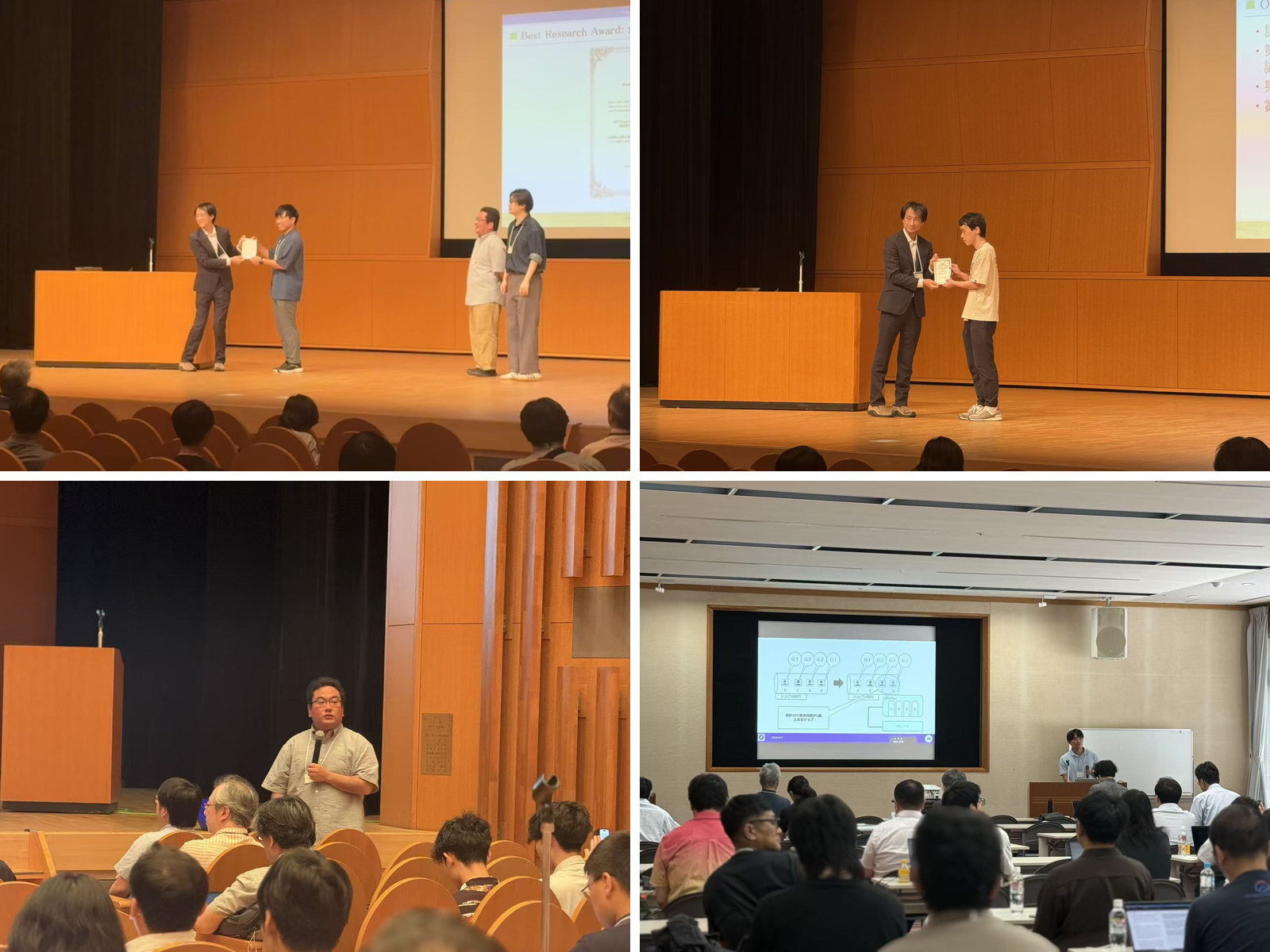
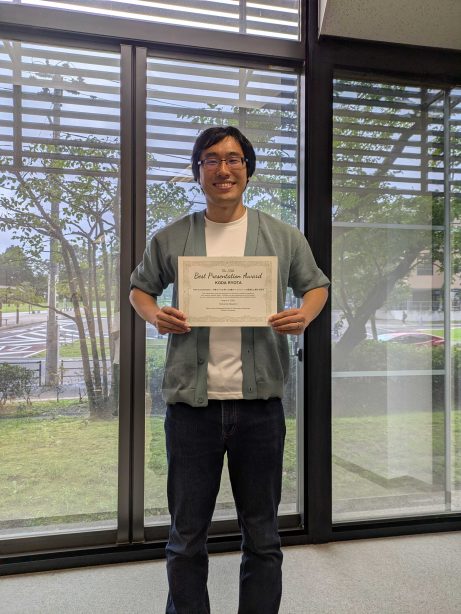
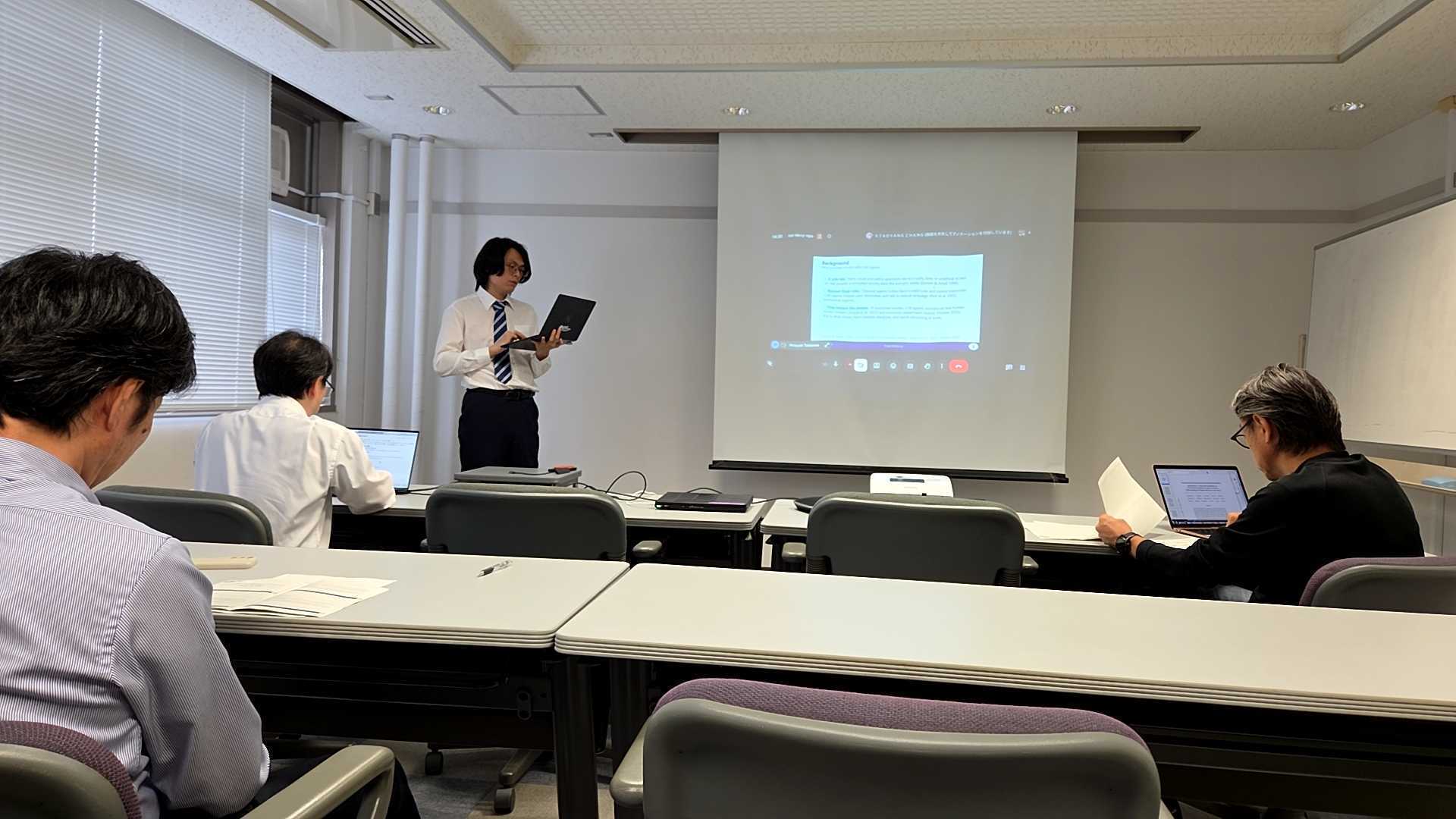
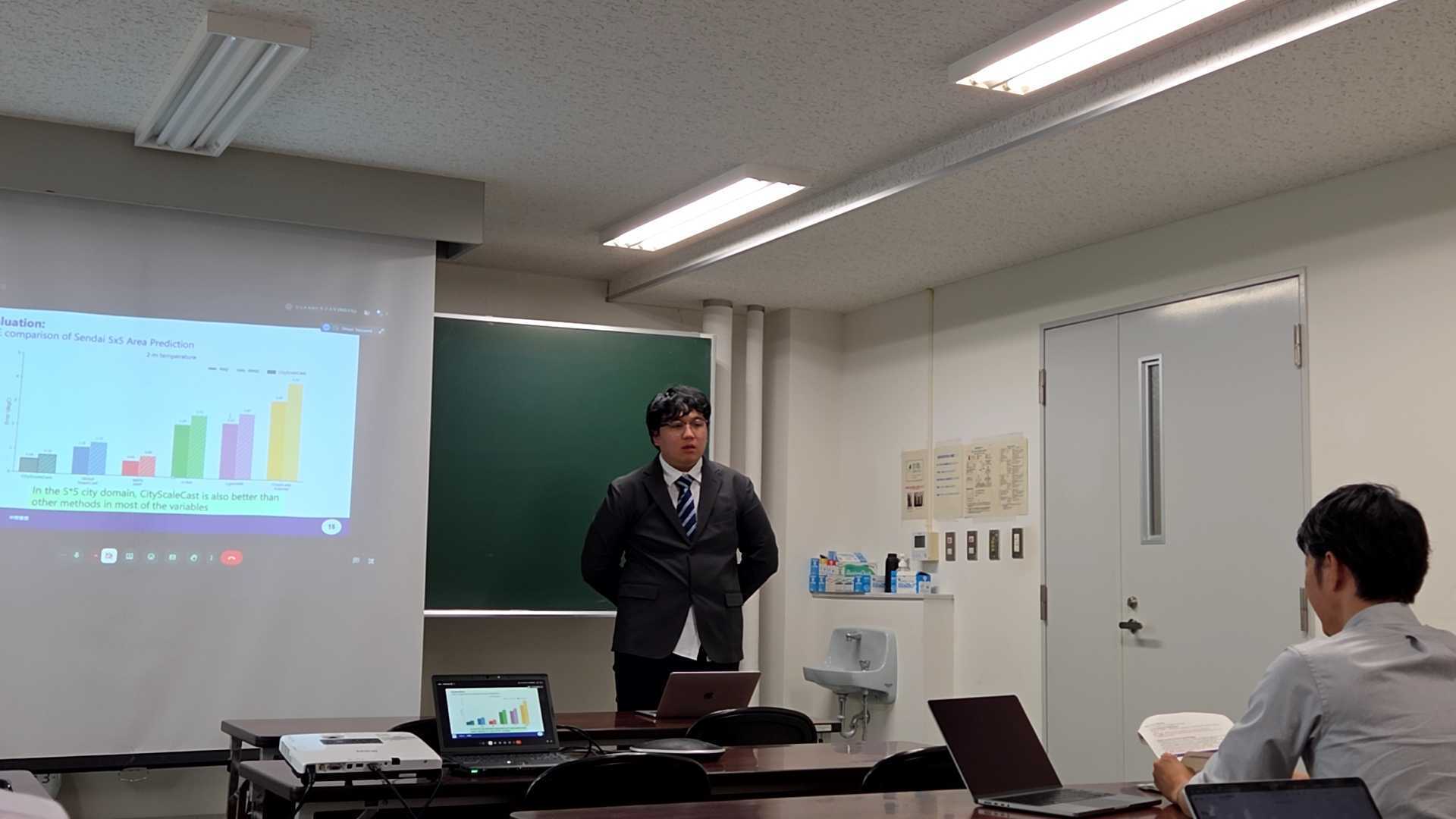
At the Doctoral Student Presentation Session held on July 17, I presented my research entitled “代理モデルを用いたX線タイコグラフィの高速化に関する研究” and received the Best Presentation Award!

This award recognizes presentations that communicate the presenter’s research clearly and engagingly to an audience from a wide range of academic backgrounds.
X-ray ptychography may be unfamiliar to many people, so I am delighted that I was able to convey what makes this field interesting and that my presentation was recognized.

Encouraged by this award, I will continue working hard to achieve even better research outcomes!

博士後期課程学生発表会にてベストプレゼンテーション賞に選出されました

こんにちは! D2の幸田です!

7月17日に開催された博士後期課程発表会において、「代理モデルを用いたX線タイコグラフィの高速化に関する研究」という題目で発表し、ベストプレゼンテーション賞を受賞しました!

このベストプレゼンテーション賞は、自分の研究を専門分野の異なる方々に分かりやすく、魅力的に伝えることができたことを表彰するものです。
X線タイコグラフィは多くの方にとってあまりなじみのない研究分野ですが、その内容や面白さをうまく伝えられたこと、そして発表を評価していただけたことを大変うれしく思います。

今回の受賞を励みに、今後もより良い研究成果を挙げられるよう、研究活動を頑張りたいと思います!

修士論文本審査が終了しました!

こんにちは、M2の常暁陽です。

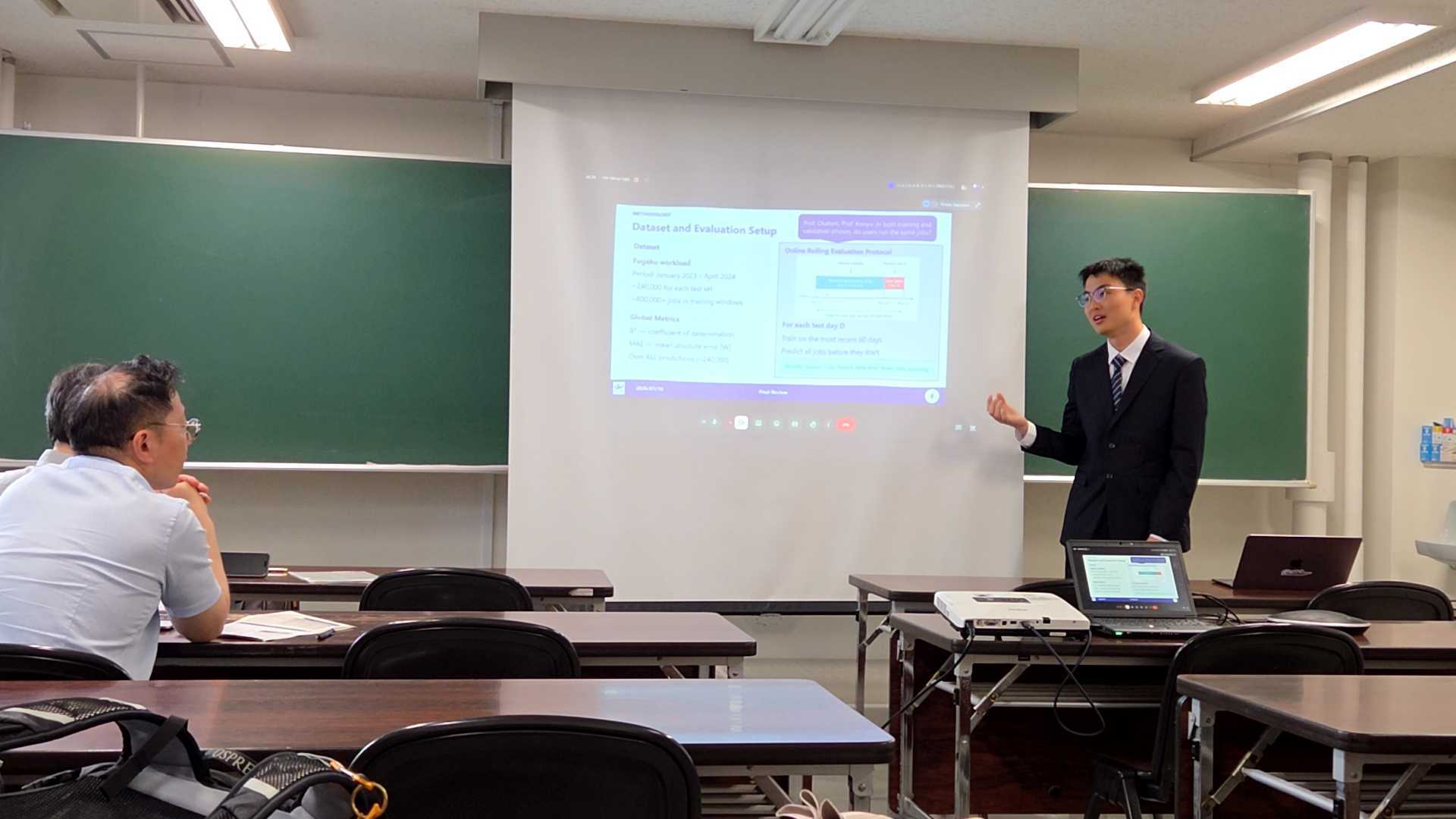
先日、M2の留学生3名が修士論文の本審査を終えました。先生方や研究室の皆さんに支えていただき、無事に終えることができました。皆さんの助けがあったからこそ、ここまで研究を進めることができたと思います。

また、修士論文の初稿を事務室へ提出しました。近いうちに修正を加えた完成版を提出する予定です.これから修正を進め、より良い形で完成させられるように頑張りたいと思います。


We have completed the final review of my master’s thesis!

Hi, I’m Haoran Ding, a second-year Master’s student.

Recently, Chang, Pan and I have just finished the final defense for my graduation thesis, thanks to the support of the professors and all the lab members. I could not have completed this thesis without everyone’s help.

Also, I have submitted my first draft to the Administration Office, and I will submit the polished version in the near future. I hope it turns out well!


We Participated in the 18th JHPCN Symposium!

Hi, This is Specially Appointed Assistant Professor Tao!

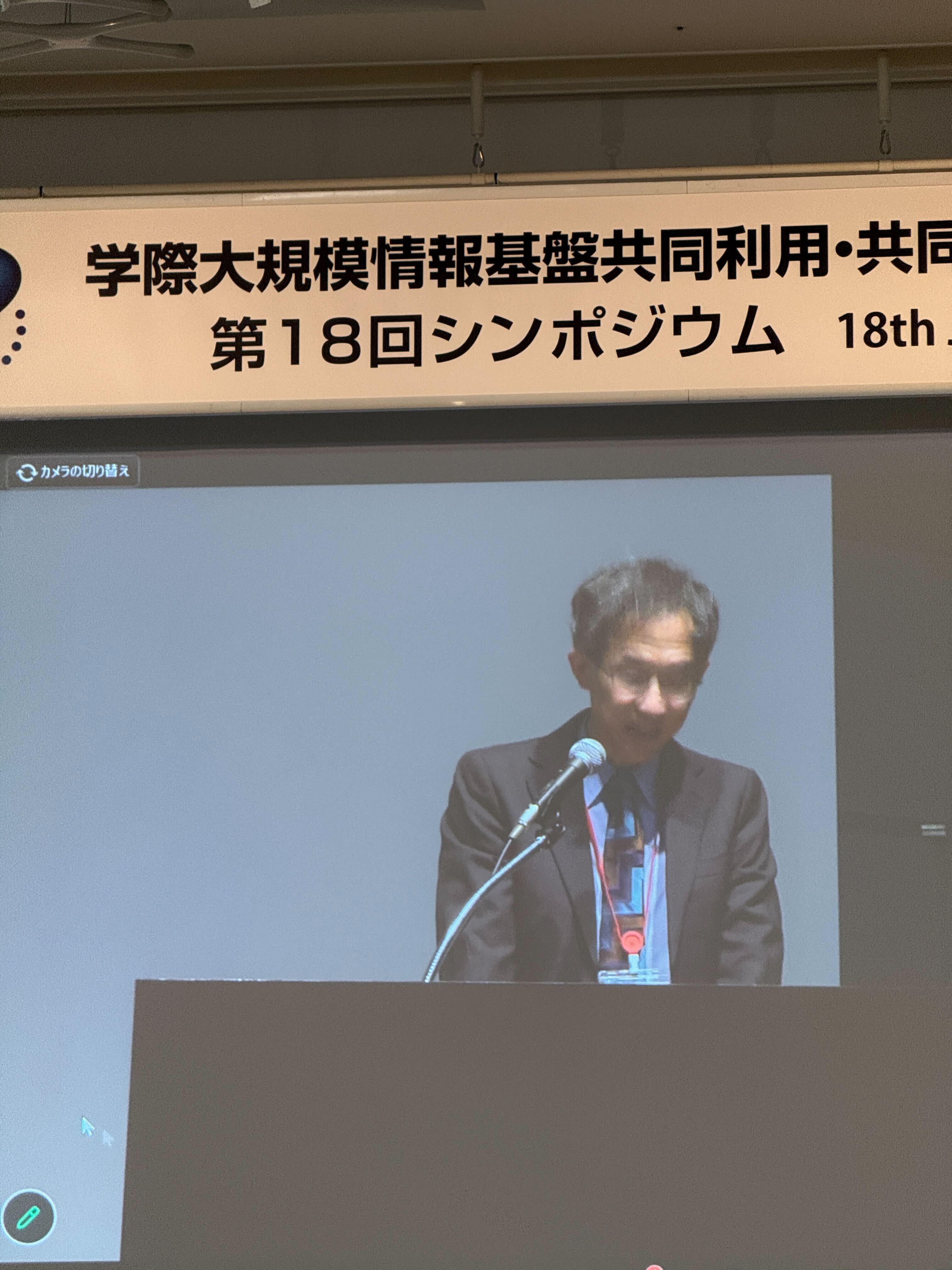
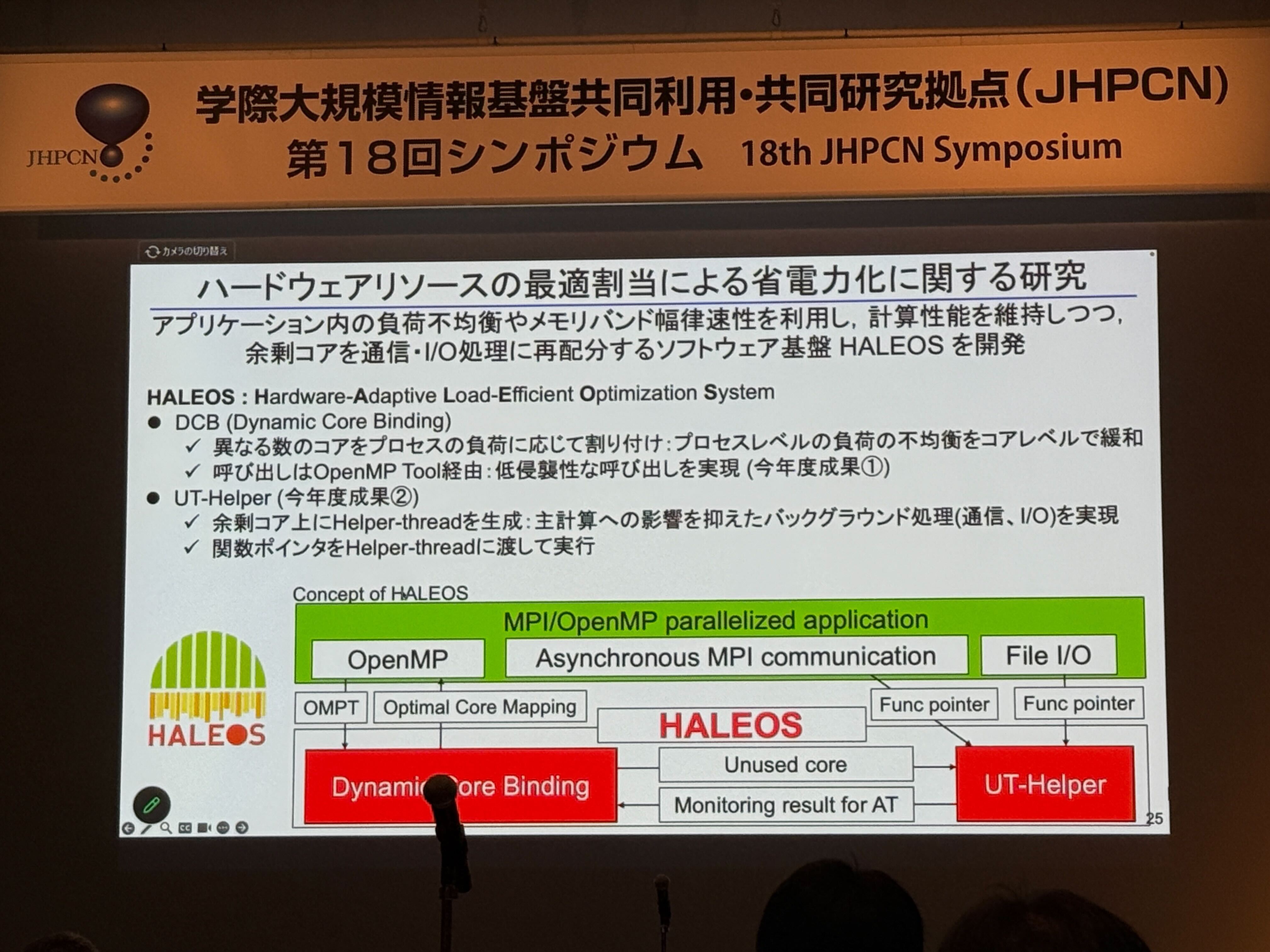
From July 9 to 10, 2026, we attended the 18th JHPCN Symposium at Tokyo Conference Center Shinagawa. JHPCN, the Joint Usage/Research Center for Interdisciplinary Large-scale Information Infrastructures, brings together information infrastructure centers at eight universities in Japan to promote interdisciplinary research across computational science, computer science, and data science. The symposium provided a forum for sharing the latest research results and plans from JHPCN projects.

The symposium featured a wide range of topics, including the operation of high-performance computing (HPC) systems, job scheduling and storage technologies, artificial intelligence and machine learning, weather and climate prediction, simulations in materials and life sciences, computing for disaster prevention, and quantum-HPC integration. In an invited talk titled “Quantum-Centric Supercomputing: Current Status and Future Prospects,” Hiroshi Horii of IBM Quantum Japan discussed the current state and future of next-generation computing platforms that flexibly integrate quantum processing units (QPUs), graphics processing units (GPUs), and central processing units (CPUs). From our laboratory, Prof. Takizawa presented his work on an urgent computing infrastructure that leverages supercomputers across multiple sites. The symposium reaffirmed the importance of applying advanced computing resources and system software to real-world challenges in interdisciplinary computational research. I hope to apply the insights gained to my future research and to user support at the Cyberscience Center.


JHPCN第18回シンポジウムに参加しました!

こんにちは、特任助教の陶です!

2026年7月9日から10日にかけて、東京コンファレンスセンター・品川で開催された第18回JHPCNシンポジウムに参加しました!JHPCN(学際大規模情報基盤共同利用・共同研究拠点)は、全国8大学の情報基盤センターが連携し、計算科学、計算機科学、データ科学を横断する共同研究を推進する研究基盤です。本シンポジウムでは、JHPCN採択課題の最新の研究成果や研究計画が共有されました。

シンポジウムでは、高性能計算(HPC)システムの運用、ジョブスケジューリングやストレージ技術、AI・機械学習、気象・気候予測、材料・生命科学シミュレーション、防災計算、量子・HPC連携など、幅広いテーマが取り上げられました。IBM Quantum Japanの堀井洋氏による「Quantum-Centric Supercomputing の現状と将来展望」と題した招待講演では、量子処理装置(QPU)、GPU、CPUを柔軟に統合する次世代計算基盤の現状と将来像が紹介されました。本研究室からは、滝沢先生が複数拠点のスーパーコンピュータを活用した緊急計算基盤について発表しました。今回の参加を通じて、今後の学際的な計算研究において、先端的な計算資源とシステムソフトウェアを実社会の課題解決に結び付けることの重要性を改めて感じました。得られた知見を今後の研究活動やサイバーサイエンスセンターにおけるユーザー支援に活かしていきたいと思います。


We Held a Welcome Party for Our New B3 Students!

Hello! I’m Watanabe, a first-year master’s student (M1).

We recently held a welcome party for the new B3 students who have joined the Takizawa Laboratory!

Although the weather was less than ideal with light rain, we enjoyed having a barbecue together. It was also a great opportunity to get to know the new B3 members, and we all had a wonderful time.

To all of our new B3 students, welcome to the Takizawa Laboratory! We hope you’ll enjoy both your research and our laboratory activities, and we look forward to spending a fulfilling and enjoyable time together.


B3歓迎会を行いました!

こんにちは!M1の渡邉です。

先日、B3歓迎会を開催しました!

当日は小雨が降るあいにくの天気でしたが、みんなでBBQを楽しみました。美味しいお肉をいただきながら、和やかな雰囲気の中で楽しい時間を過ごすことができました。

B3の皆さん、改めて滝沢研究室へようこそ!これから一緒に研究や研究室行事を楽しみながら、充実した研究室生活を送っていきましょう!


Talks at the 37th NEC User Group Meeting!

Hi, this is Specially Appointed Assistant Professor Tao!

From May 18 to 20, 2026, I attended the 37th NEC User Group Meeting, NUG Society Meeting XXXVII 2026, held at the Information Technology Center of the University of Cologne (ITCC) in Cologne, Germany. The NEC User Group (NUG) is an international meeting where users, operators, and developers of NEC supercomputers and high performance computing (HPC) systems share the latest technologies, operational experience, and research results.

From our laboratory, Prof. Takizawa and I gave talks. Prof. Takizawa spoke on AI-assisted programming in his talk titled “Towards AI-assisted Programming at the Tohoku University Cyberscience Center.” He introduced HPC user support activities at the Tohoku University Cyberscience Center and discussed the potential of large language models (LLMs) for code understanding, performance optimization, semantic equivalence verification, automated debugging, and performance bottleneck analysis. I gave a talk titled “A Runtime Prediction Model for Capacity Planning in Shared-Backend LLM Multi-Agent Social Simulation,” introducing AI-agent social simulation for tsunami evacuation. Based on the supercomputer AOBA and ExpressHPC, an urgent computing framework that connects multiple supercomputers, I discussed how to predict the runtime of large-scale LLM multi-agent simulations and use it for capacity planning in city-scale evacuation simulation.

The meeting also covered a wide range of topics, including NEC’s HPC and Research Information Infrastructure (HPC/RII), next-generation vector systems, RISC-V and vector extensions, GPU resource utilization, integration of HPC and AI services at RWTH Aachen University, Slurm cluster operation, storage research at the Center for Computational Sciences, University of Tsukuba, and high-performance fluid dynamics algorithms at the University of Cologne. Through this meeting, I was reminded that the future development of HPC depends on the combined progress of hardware, software, user support, and AI applications. I hope to apply the insights gained from this meeting to my future research and to user support at the Cyberscience Center.

NECユーザーグループ第37回会合で講演しました!

こんにちは、特任助教の陶です!

2026年5月18日から20日にかけて、ドイツ・ケルンのケルン大学情報技術センター(ITCC)で開催されたNECユーザーグループ第37回会合に参加しました!NECユーザーグループ(NUG)は、NECのスーパーコンピュータや高性能計算(HPC)システムのユーザー、運用者、開発者が集まり、最新技術、運用経験、研究成果を共有する国際的な会合です。

本研究室からは、滝沢先生と私がそれぞれ講演しました。滝沢先生は、AI支援プログラミングをテーマに、”Towards AI-assisted Programming at the Tohoku University Cyberscience Center” という題目で、東北大学サイバーサイエンスセンターにおけるHPCユーザー支援の取り組みを紹介しました。また、大規模言語モデル(LLM)を用いたコード理解、性能最適化、意味的等価性検証、自動デバッグ、性能ボトルネック解析の可能性について議論しました。私は “A Runtime Prediction Model for Capacity Planning in Shared-Backend LLM Multi-Agent Social Simulation” という題目で、津波避難を対象としたAIエージェント社会シミュレーションについて紹介しました。講演では、スーパーコンピュータAOBAと複数スーパーコンピュータを連携させる緊急計算フレームワークExpressHPCを背景に、大規模なLLMマルチエージェントシミュレーションの実行時間を予測し、その結果を都市規模の避難シミュレーションにおける計算資源計画へ活用する取り組みを説明しました。

会議では、NECの高性能計算・研究情報基盤(HPC/RII)、次世代ベクトルシステム、RISC-Vとベクトル拡張、GPU資源の利用、アーヘン工科大学におけるHPCとAIサービスの統合、Slurmクラスタ運用、筑波大学計算科学研究センターのストレージ研究、ケルン大学の高性能流体計算アルゴリズムなど、幅広い内容が扱われました。今回の参加を通じて、今後のHPCの発展には、ハードウェア、ソフトウェア、ユーザー支援、AI活用を一体的に進めることが重要であると改めて感じました。得られた知見を、今後の研究活動とサイバーサイエンスセンターでのユーザー支援に活かしていきたいと思います。