Talks at the 37th NEC User Group Meeting!

Hi, this is Specially Appointed Assistant Professor Tao!

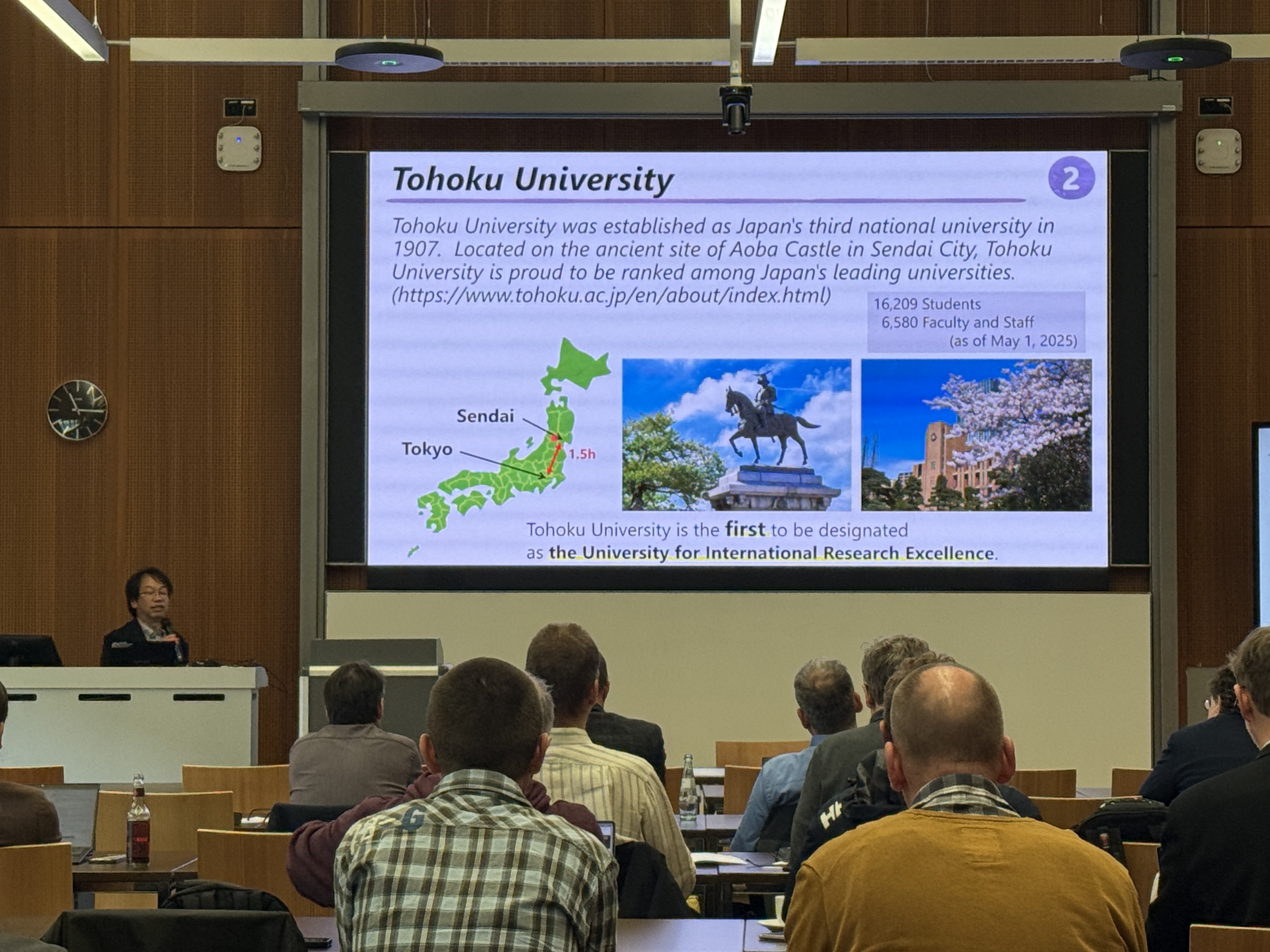
From May 18 to 20, 2026, I attended the 37th NEC User Group Meeting, NUG Society Meeting XXXVII 2026, held at the Information Technology Center of the University of Cologne (ITCC) in Cologne, Germany. The NEC User Group (NUG) is an international meeting where users, operators, and developers of NEC supercomputers and high performance computing (HPC) systems share the latest technologies, operational experience, and research results.

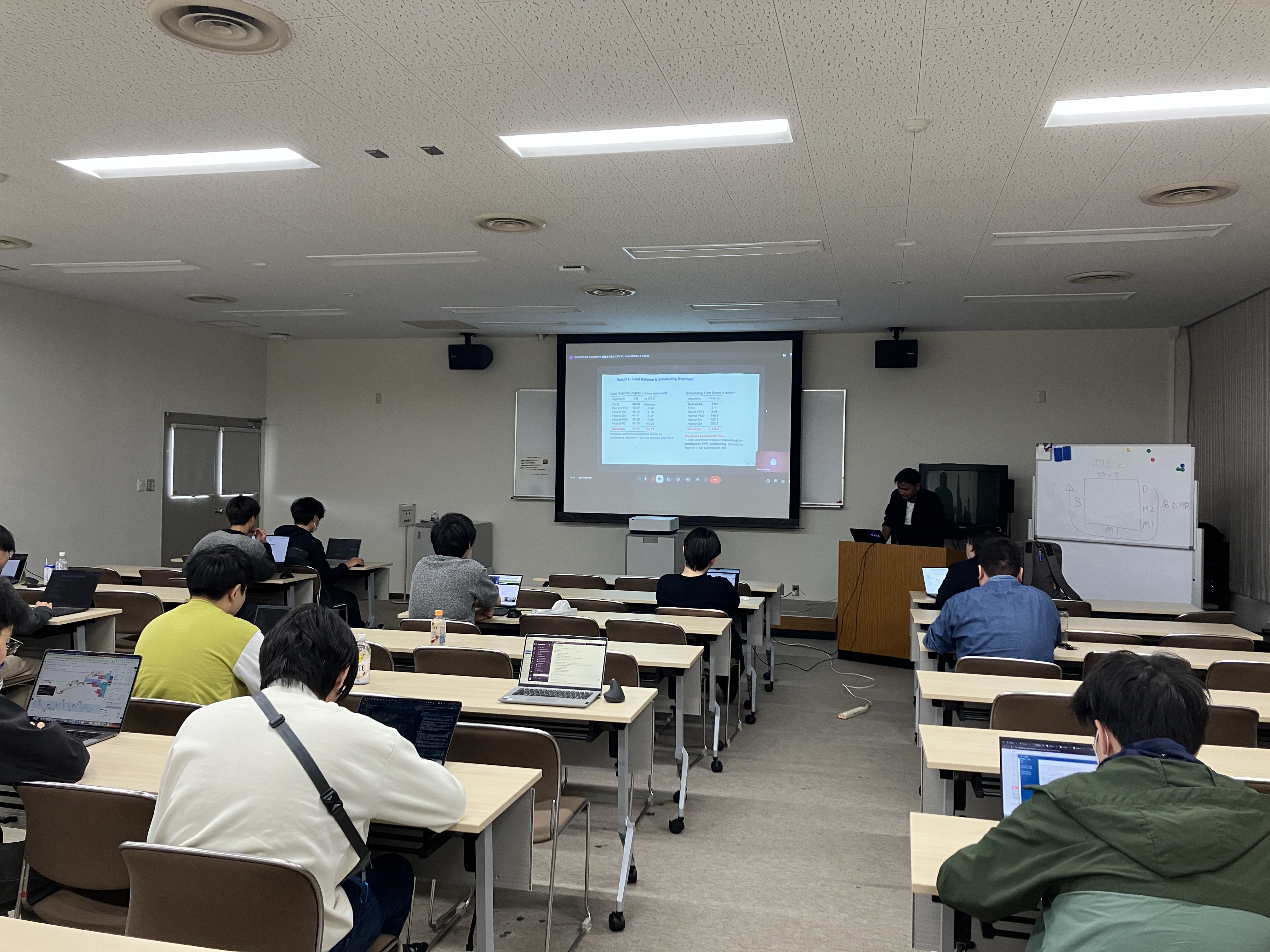
From our laboratory, Prof. Takizawa and I gave talks. Prof. Takizawa spoke on AI-assisted programming in his talk titled “Towards AI-assisted Programming at the Tohoku University Cyberscience Center.” He introduced HPC user support activities at the Tohoku University Cyberscience Center and discussed the potential of large language models (LLMs) for code understanding, performance optimization, semantic equivalence verification, automated debugging, and performance bottleneck analysis. I gave a talk titled “A Runtime Prediction Model for Capacity Planning in Shared-Backend LLM Multi-Agent Social Simulation,” introducing AI-agent social simulation for tsunami evacuation. Based on the supercomputer AOBA and ExpressHPC, an urgent computing framework that connects multiple supercomputers, I discussed how to predict the runtime of large-scale LLM multi-agent simulations and use it for capacity planning in city-scale evacuation simulation.

The meeting also covered a wide range of topics, including NEC’s HPC and Research Information Infrastructure (HPC/RII), next-generation vector systems, RISC-V and vector extensions, GPU resource utilization, integration of HPC and AI services at RWTH Aachen University, Slurm cluster operation, storage research at the Center for Computational Sciences, University of Tsukuba, and high-performance fluid dynamics algorithms at the University of Cologne. Through this meeting, I was reminded that the future development of HPC depends on the combined progress of hardware, software, user support, and AI applications. I hope to apply the insights gained from this meeting to my future research and to user support at the Cyberscience Center.

Third-Year Undergraduate Students Have Joined Our Lab!

Hello, I am Watanabe, a first-year master’s student.

Recently, the assignment of third-year undergraduate students (B3) to research laboratories was announced, and new members have joined our lab. I am looking forward to working together with them.

With the arrival of these new junior members, I have come to realize that I am now in the position of being a senior student, which has given me a renewed sense of responsibility. Although I still have much to learn myself, I hope to support them as much as I can in both their research activities and daily life in the laboratory.

I also intend to approach my own research with even greater motivation than before and work hard to achieve meaningful results.

The global seminar has started!

Hello, I’m Watanabe, a first-year master’s student.

Our Global Seminar started the other day.
With the new academic year underway, our lab activities have officially begun, and we’ve welcomed new B4 students as well as M1 students who transferred from other institutions.
With more members, the group has become even more lively, and we’ll do our best together by helping each other whenever we run into difficulties.

We went cherry blossom viewing!

Hello! I’m Imai, a second-year master’s student (M2) starting this academic year.

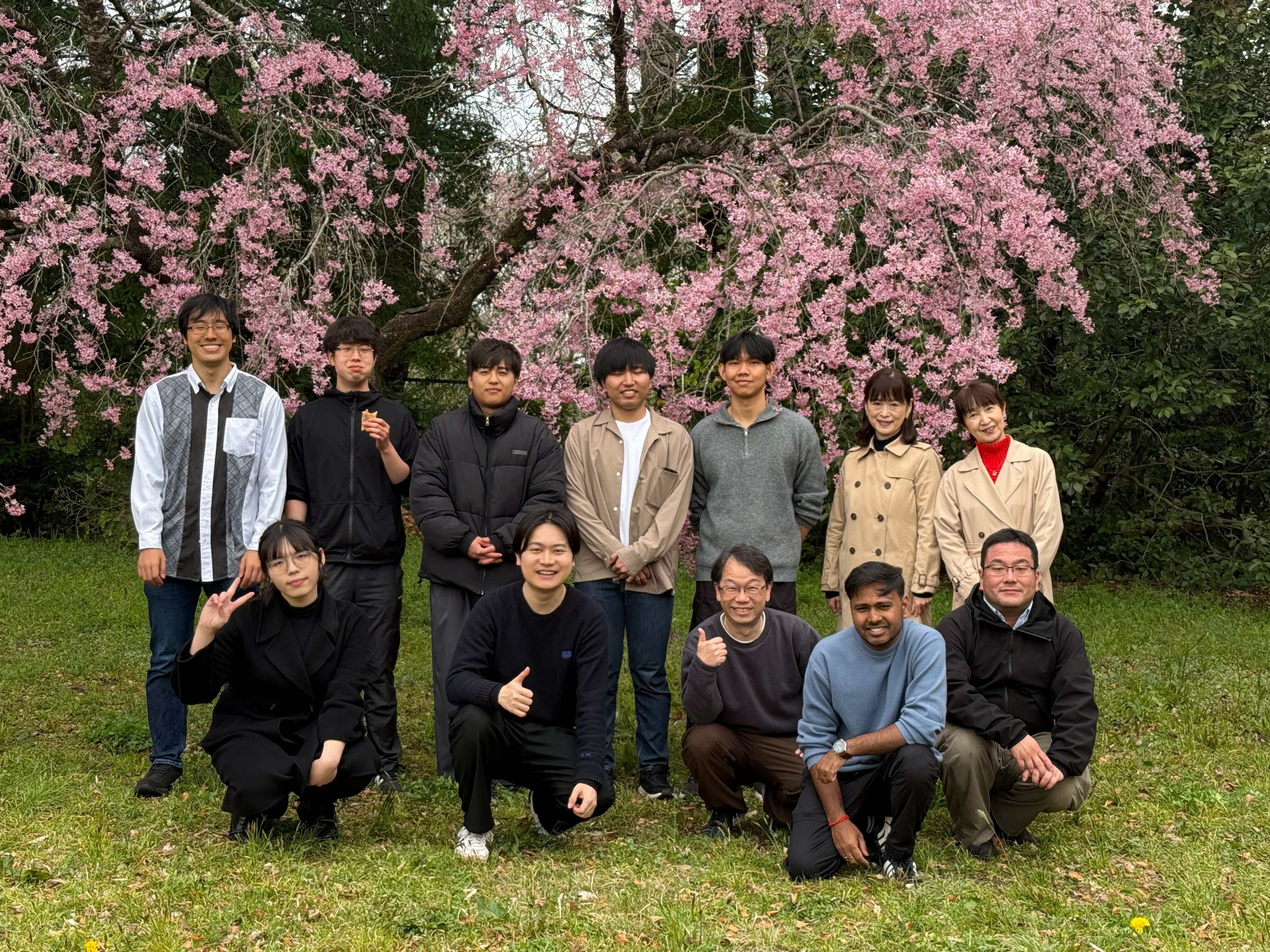
The other day, our lab members had a cherry blossom viewing party. The timing was perfect—the flowers were in full bloom, and the pleasant weather made it a great way to feel the arrival of spring. Personally, I especially enjoyed the pizza—it was really delicious!

I’m looking forward to working hard in the new academic year!

I attended Professor Hiroaki Kobayashi’s retirement commemoration lecture and celebration!

Hello, I am Tao, a Specially Appointed Assistant Professor.

On March 13, 2026, I attended the Retirement Commemorative Lecture and Celebration for Professor Hiroaki Kobayashi, held at Hotel Metropolitan Sendai. On that day, many people gathered from within and outside Tohoku University, including those from academia, industry, and government, as well as collaborators, students, and alumni, providing an opportunity to reflect once again on Professor Kobayashi’s longstanding contributions to education, research, and academic exchange.

At the commemorative lecture, under the chairmanship of Professor Takizawa, we first heard opening remarks from Professor Takafumi Aoki, followed by Professor Kiyoshi Kurihara. Subsequently, there was a video message from Professor Michael Resch, lectures by Professor Shunichi Koshimura, Professor Sabine Roller, and Professor Akihiro Musa, and finally a commemorative lecture by Professor Kobayashi himself. During the group commemorative photograph session and the subsequent celebration, many people offered congratulatory speeches and presented commemorative gifts, and the event was enveloped in a warm atmosphere throughout. Through my participation this time, I was able to once again appreciate the significant achievements that Professor Kobayashi has built in research, education, and international exchange.


I Participated in the Joint HPC-QS Research Meeting!

Hello! I’m Project Assistant Professor Tao.

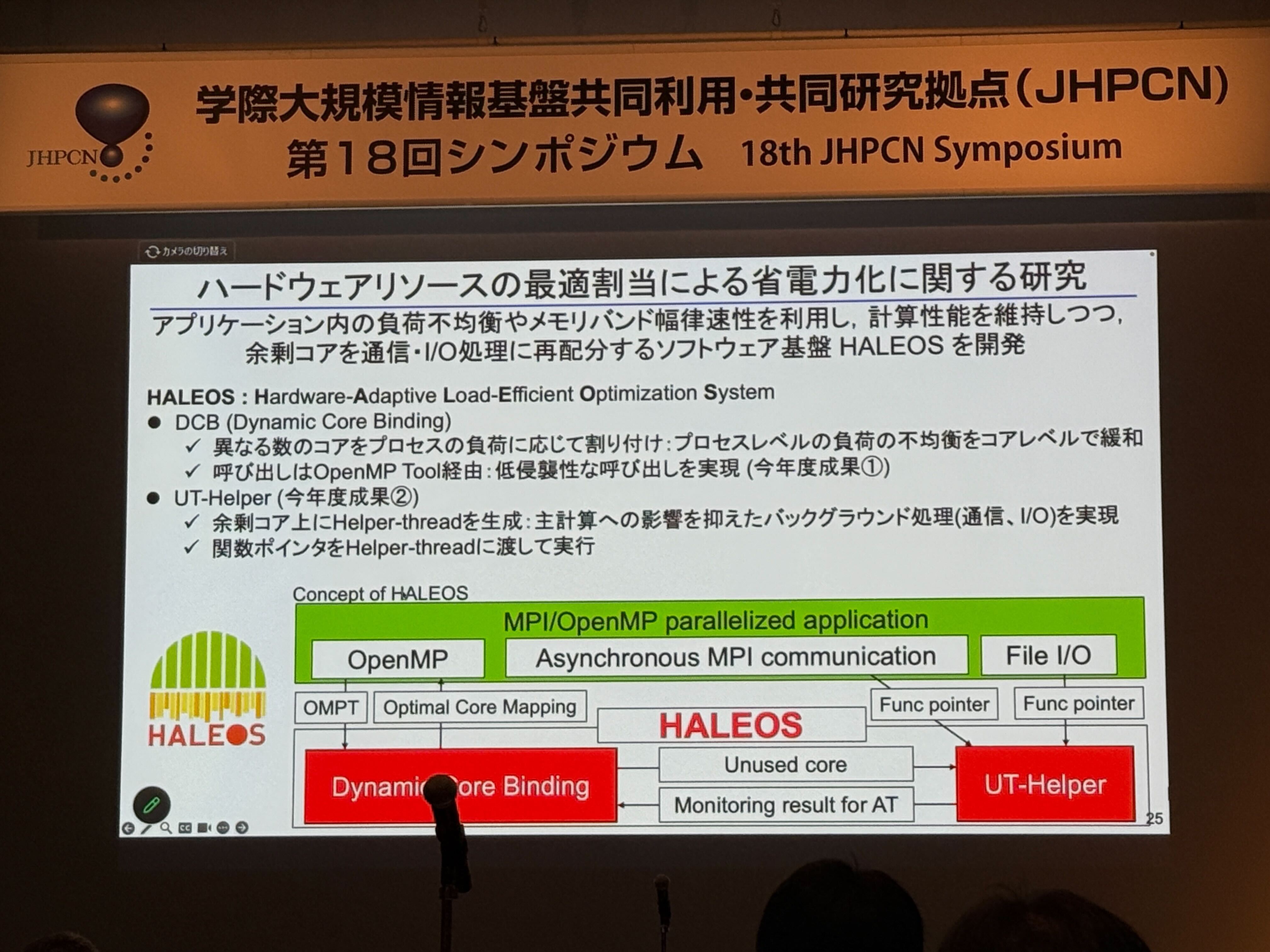
From March 16 to 18, I participated in the 203rd HPC and 17th QS Joint Research Meeting at the Hokkaido University Academic Exchange Center. The meeting featured presentations on HPC systems, quantum computing, quantum-HPC integration, numerical computation, and related topics.

Project Researcher Omura from our laboratory presented “Implementation of a GPU Resource Reclamation Mechanism for Emergency Computing and Its Practical Evaluation.” Professors Takizawa and Kawai were co-authors. Additionally, Visiting Associate Professor Takahashi also participated as a co-author in “FS3.0: Research on HPCI Operational System Development Plan Looking Toward the Post-Fugaku Era.”

Overall, the meeting covered topics including HPC systems, numerical computation, accelerator computing, performance evaluation, as well as quantum annealing, block encoding, QC and HPC, qubit mapping, FTQC, Fugaku and energy efficiency, LLM utilization technologies, and Ising machines. The intersection of HPC and quantum computing, as well as the operation and integration of next-generation computing infrastructure, were key focal points of this research meeting.

The graduation research presentation session has been completed!!

Hello! This is Watanabe, a fourth-year undergraduate student.

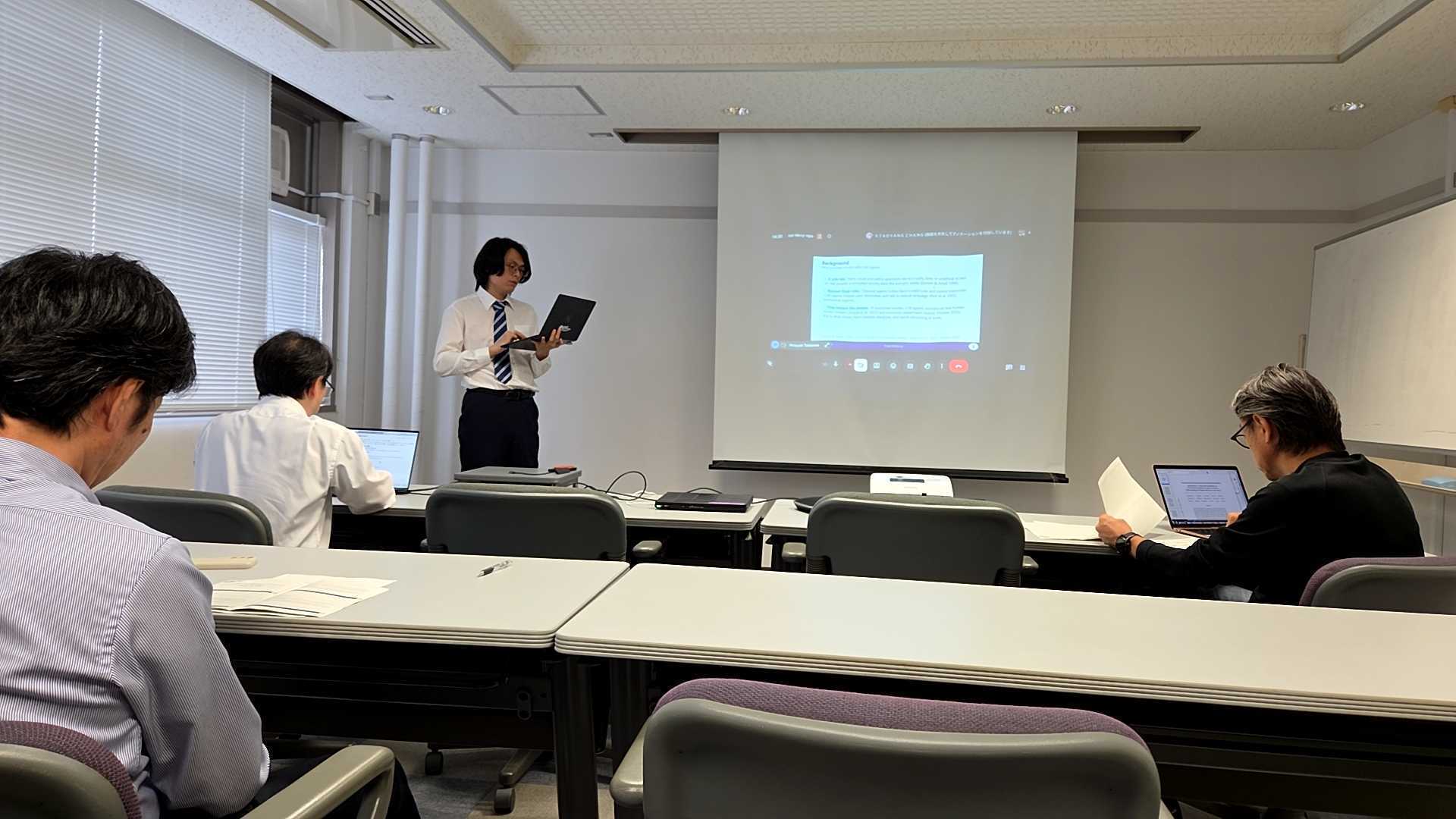
We recently had our undergraduate thesis presentation, and Ishihara and I (both B4 students) gave our presentations. We were able to complete them successfully and had meaningful discussions with both students and professors.

Based on the valuable comments we received during the presentation, we will continue working hard on writing our undergraduate thesis and our xSIG paper.
We would like to sincerely thank all the professors and students who supported us with our research and presentation practice.

We held a farewell party!

Hello! I’m Koda, a first-year doctoral student.

The other day, we held a farewell party for M2 students Katayama, Tanizawa, and Yanai, who are graduating this year!
Since it was hard to coordinate everyone’s schedules, we split the farewell party into two sessions, but both were fun and lively!
We wish the M2 students entering the workforce all the best in their future endeavors!

I participated in the Multidisciplinary Seminar & Techno Festival

Hello, this is Imai, an M1 student.

On February 17th, the Multidisciplinary Seminar took place, followed by the Techno Festival on February 18th and 19th.
During the Multidisciplinary Seminar, I presented my research findings and future plans to representatives from private companies and other M1 students from different research labs. Additionally, in the Matchmaking Session held within the Techno Festival, I attended company presentations from various businesses to gain a deeper understanding of their work.

Explaining my research in simple terms that non-experts could understand was quite challenging, but it was a great learning experience. Furthermore, listening to other students’ research and the company presentations broadened my perspective, making the event highly valuable.

I will continue to work hard on my research, taking into account the feedback I received!


Presented at the master’s thesis final review

Hello, this is Tanizawa, an M2 student.
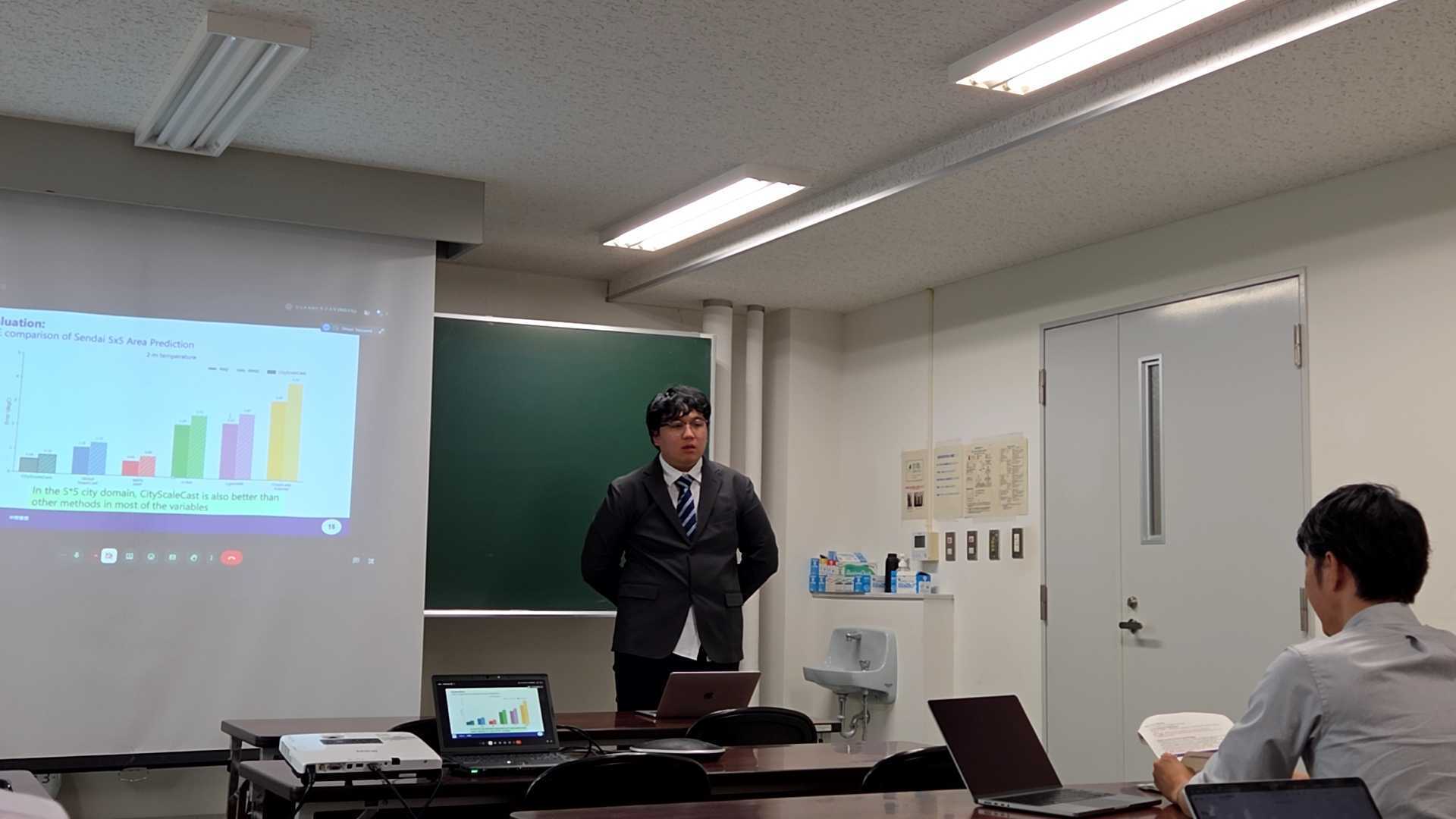
The final master’s thesis defense was held recently. In Takizawa Laboratory, Katayama, Yanai, and I each gave our presentations. I’m happy to say that we all finished successfully and were able to submit the duplicate copies of our theses by the deadline.
Using the helpful feedback we received from the examiners, I’ll keep refining my thesis as we work toward submitting the final official version.
I’d like to give a big thank you to the professors and everyone in the lab — both seniors and juniors — for supporting us with revisions and presentation practice. I really appreciate all your help!