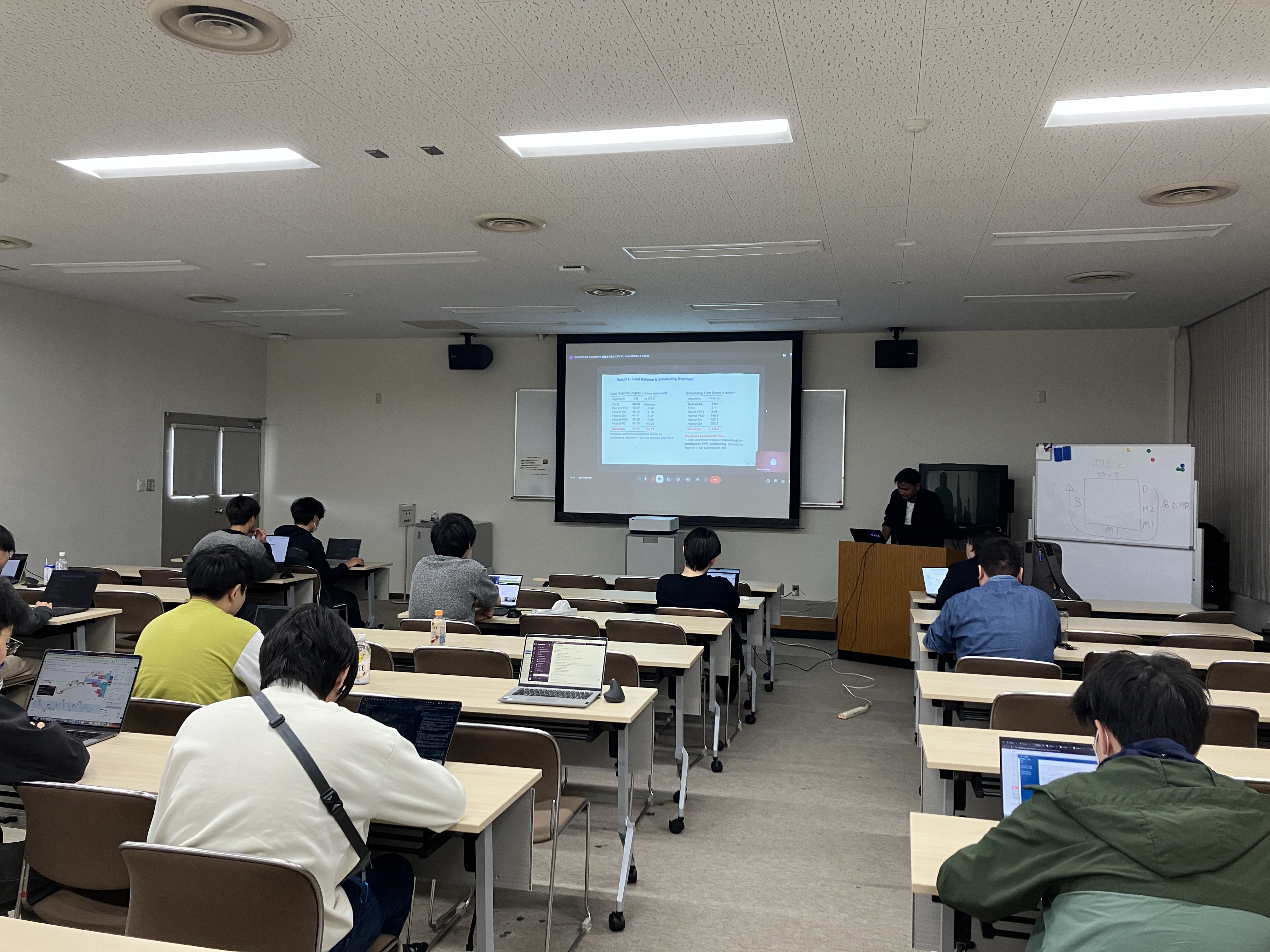
Presented at the master’s thesis final review

Hello, this is Tanizawa, an M2 student.
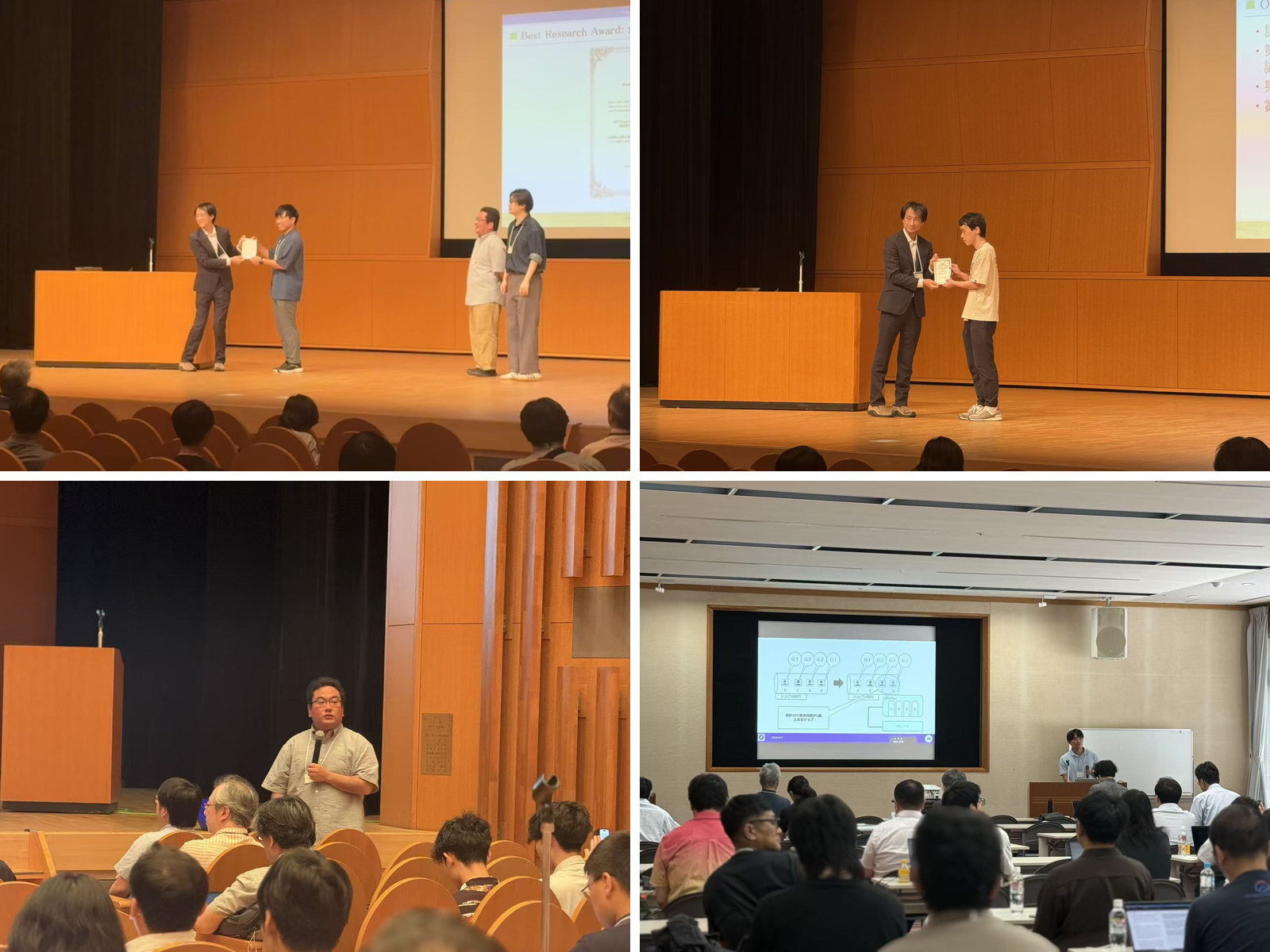
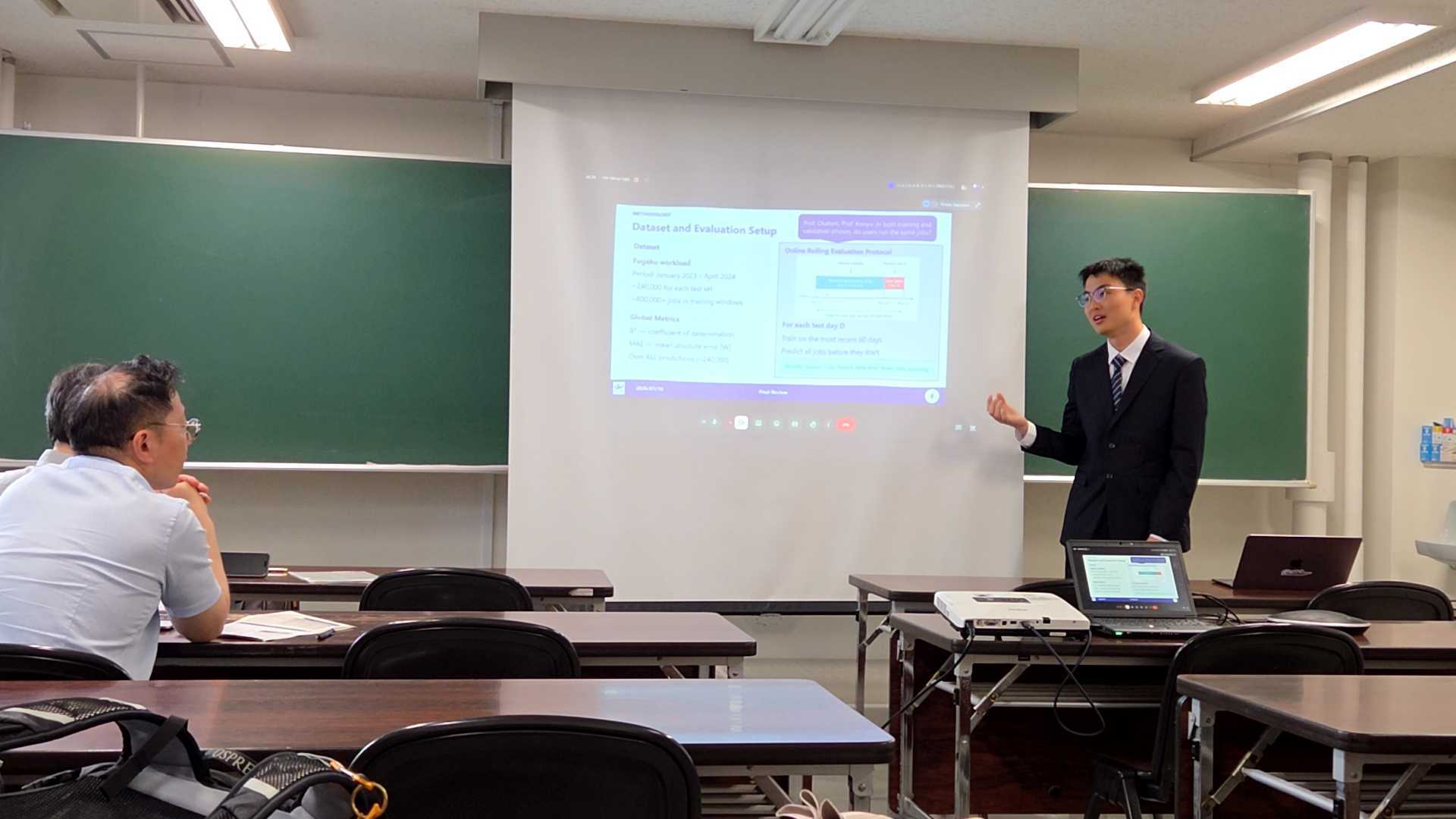
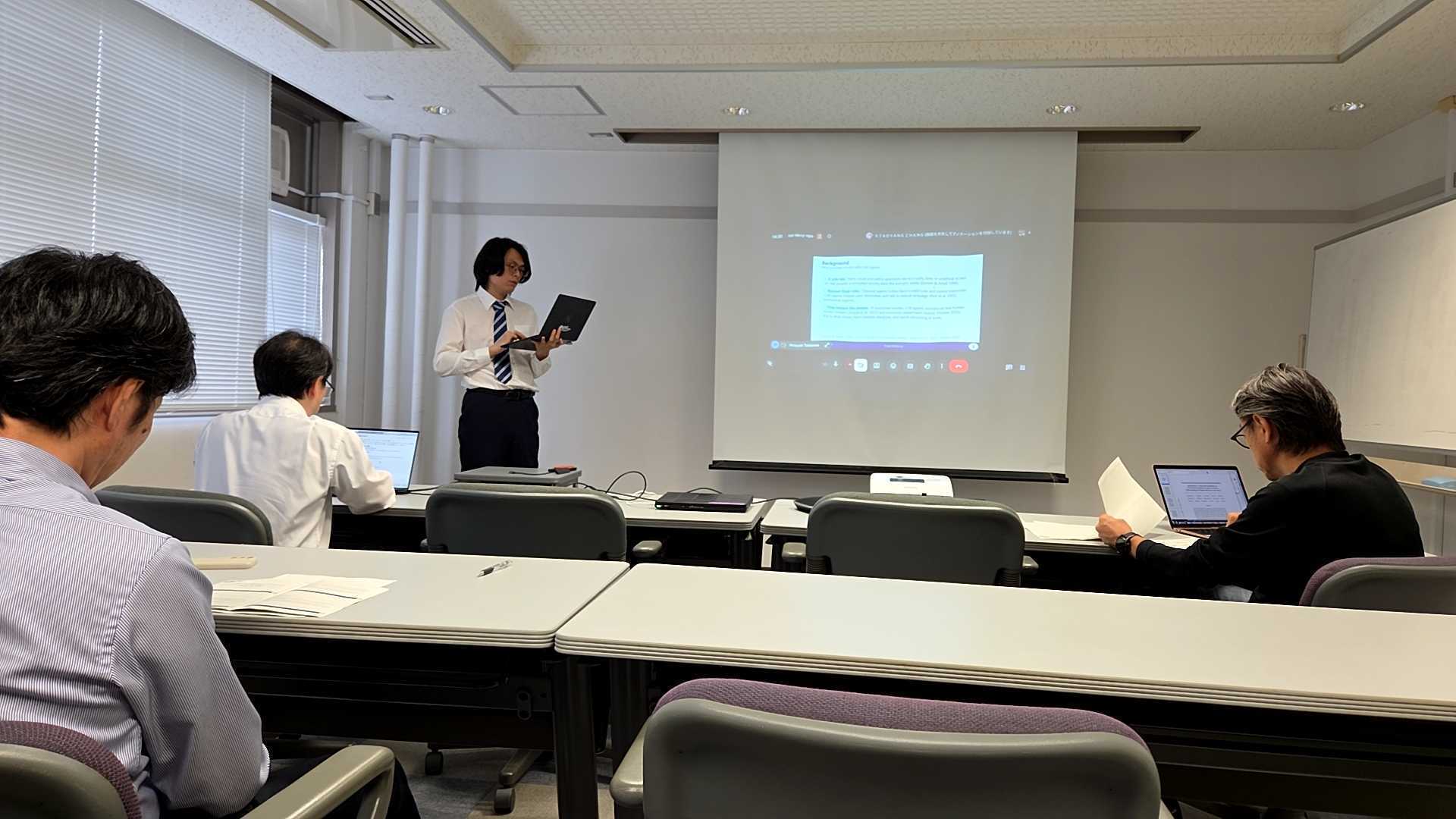
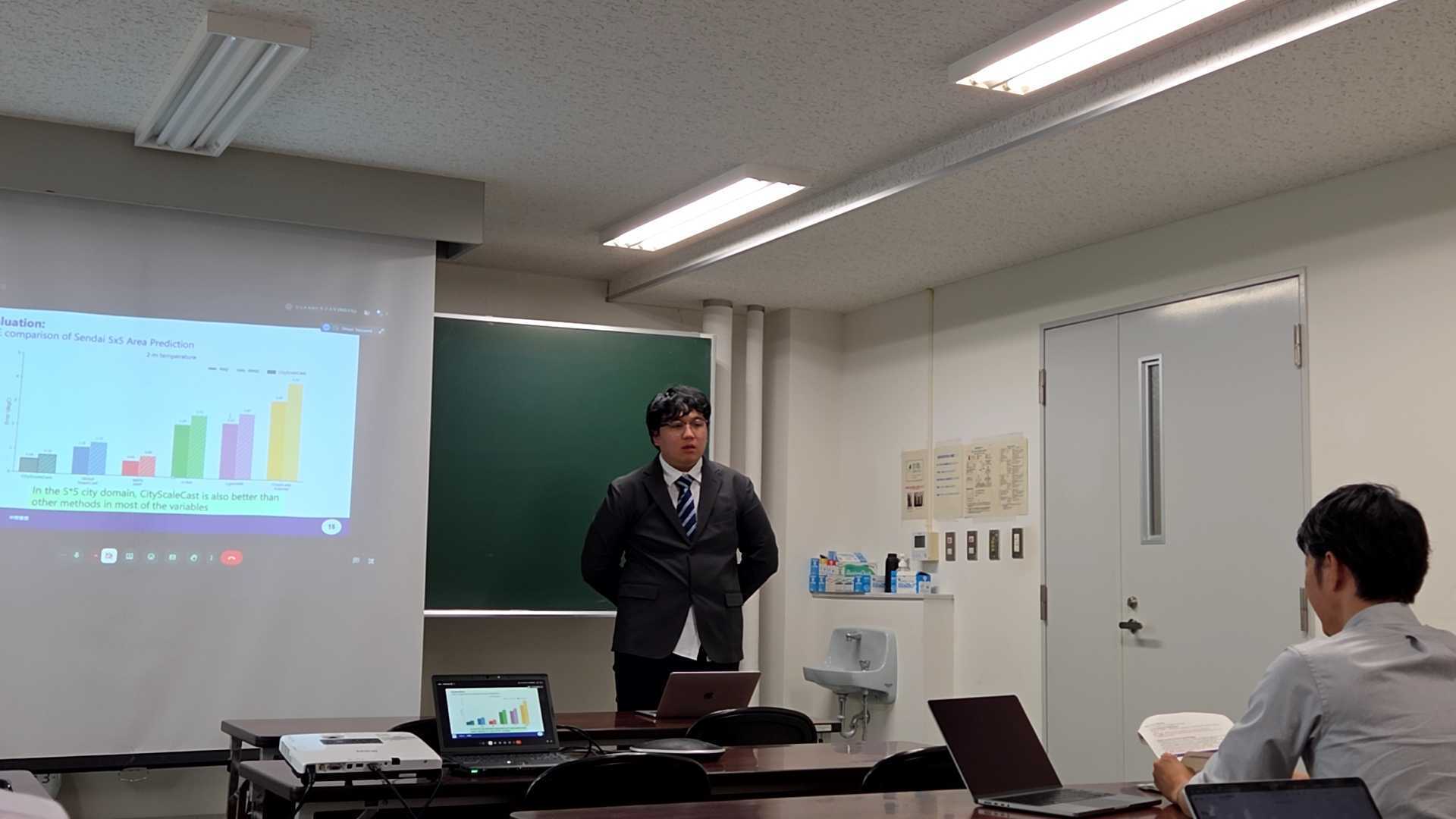
The final master’s thesis defense was held recently. In Takizawa Laboratory, Katayama, Yanai, and I each gave our presentations. I’m happy to say that we all finished successfully and were able to submit the duplicate copies of our theses by the deadline.
Using the helpful feedback we received from the examiners, I’ll keep refining my thesis as we work toward submitting the final official version.
I’d like to give a big thank you to the professors and everyone in the lab — both seniors and juniors — for supporting us with revisions and presentation practice. I really appreciate all your help!

Attending HPCAsia 2026 !!

Hello.
My name is Yuta Tanizawa, an M2 student.

I participated in HPCAsia 2026, which was held from January 26 to 29, 2026, at the Osaka International Convention Center (Grand Cube Osaka).

This conference was jointly organized by SupercomputingAsia (SCA) and The International Conference on High Performance Computing in Asia-Pacific Region (HPC Asia), and is one of the major international conferences and events in the field of high-performance computing (HPC).
SCA was launched in 2018 and has been jointly organized every year by HPC centers in Australia, Japan, Singapore, and Thailand. HPC Asia, on the other hand, is a long-standing international conference on HPC technologies in the Asia–Pacific region, with a history dating back to the 1990s.

From our laboratory, Tseng, Pan, Katayama, and Tanizawa participated in the conference and gave the following presentations:

“TRIOS: Reducing File-System Contention through Predictive Time-Resolved I/O Simulation in Job Scheduling”
YuTsen Tseng, Masatoshi Kawai, Keichi Takahashi, Hiroyuki Takizawa

“CityScaleCast: Spatiotemporal GNN for City-Scale Weather Prediction with GraphCast-Guided Parallel Modeling and Multi-Step Forecasting in Sendai”
Xuanwen Pan (Tohoku University)

“Explainable AI-Guided Genetic Algorithms for Efficient Software Automatic Tuning”
Toshinobu Katayama (Tohoku University)

“Semantic Equivalence Verification of HPC Codes Using LLMs”
Yuta Tanizawa (Tohoku University)

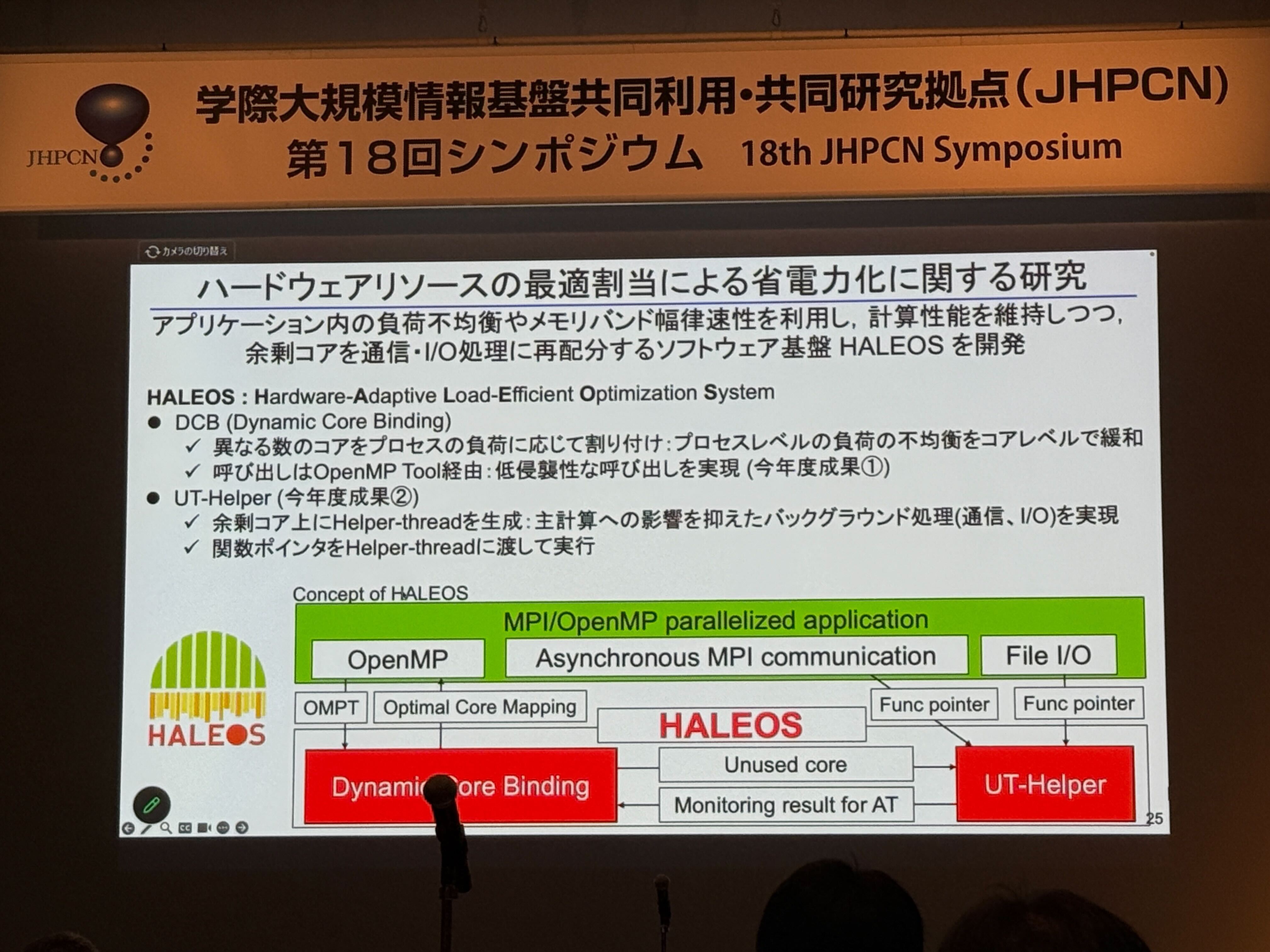
In addition, Professor Hiroyuki Takizawa gave the following presentation:

“Cyberscience Center”
Hiroyuki Takizawa (Tohoku University)


Furthermore, during the poster session, we also presented posters showcasing research from Tohoku University. Many attendees stopped by our booth, and through explanations and discussions about our research and systems, we were able to receive valuable feedback from researchers and industry professionals from both Japan and abroad.


Throughout the conference, numerous talks and presentations were delivered on the latest research and technological trends in the HPC field, making it an extremely stimulating experience. Through our presentations and exhibitions, we had an excellent opportunity to reexamine our research from various perspectives.
By leveraging the knowledge and ideas gained through our participation in HPCAsia 2026, I would like to further advance my research and continue to engage in research activities with renewed motivation.

We won an award at the 2025 APAC HPC/AI Competition!

Hello! I’m Koda, a D1 student.

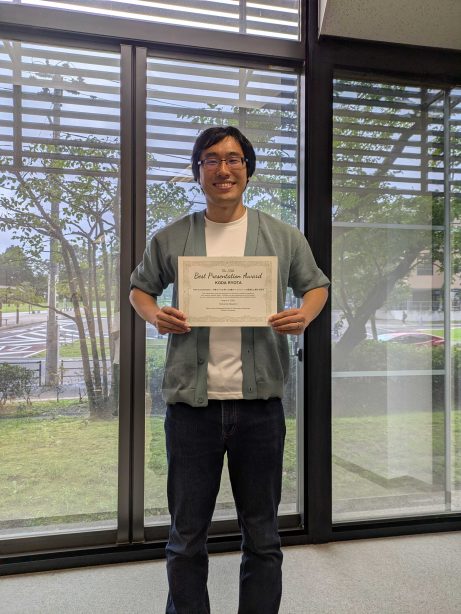
At the ongoing SCA/HPCAsia 2026 conference, the award ceremony for the 2025 APAC HPC/AI Competition was held. Team To(Hoku)^2_w/R, consisting of Koda and Shubham from the Takizawa Lab and Yuya Kudo from Hokkaido University, received the “Certificate of Participation and Excellence”!
Our team tackled the HPC task of accelerating NWChem. We worked on the acceleration from July to September and presented the acceleration results in October.

At the awards ceremony, we discussed the specifics of the acceleration with students from the winning team. While our approach was similar, we didn’t place among the top winners, but we achieved a satisfying result!

We held our year-end party!

Hello! This is Imai, a first-year master’s student.
The year-end party was held recently.
It was a great event where we could have open conversations regardless of nationality or academic year, making it a wonderful way to wrap up 2025.
In 2026, I hope to dedicate myself even more to my research!

Midterm Review of Master’s Thesis Completed

Hello, this is Yuta Tanizawa, a second-year master’s student.

The Midterm Review of Master’s Thesis was held recently, and Katayama, Tanizawa, and Yanai (M2) gave their presentations.
Based on the valuable comments and feedback we received during the review, we will continue working hard toward the final thesis defense.

I would like to sincerely thank the professors and fellow students who kindly supported us through presentation rehearsals and helpful discussions.
Thank you very much for your continued guidance and encouragement.

Takizawa Lab has participated in SC25!

Hello! This is Imai, a first-year master’s student.

I attended SC25, which was held in St.Louis from November 16 to 21!
SC25 is the largest international conference in the HPC industry, with 18,000 participants and over 500 organizations joining this year.

Professor Takizawa and Professor Kawai, along with students Tseng (D1), Nomura (M1), and Imai (M1), participated from our lab.
The three students presented their research posters at the Research Posters session held from November 18th to 20th.
Specifically, during the Posters Reception held on November 18th, they were able to discuss their research with researchers from all over the world.


Additionally, the students collaborated with members from other research labs at Tohoku University to set up an exhibition booth. At the booth, we introduced Tohoku University’s supercomputer systems and presented our research.


There were many lectures and exhibits that were relevant to my own research, allowing me to gain a very valuable experience.
Through the poster presentation, I received numerous ideas that I can incorporate, and I am now motivated to work even harder on my research moving forward!

Successfully Conducted a Demonstration Experiment Linking Multiple Heterogeneous Supercomputers for Emergency Response During Disasters!

Hello, I’m Tanizawa, an M2 student.

I would like to share a recent demonstration experiment conducted by the Tohoku University CyberScience Center, titled “Demonstration of Linking Multiple Heterogeneous Supercomputers for Emergency Response During Disasters”. Although I was not directly involved in the experiment, I found the results extremely interesting.

In this project, three supercomputers with different system configurations and operational setups—AOBA at Tohoku University, SQUID at Osaka University, and Furo at Nagoya University—were linked together to perform tsunami inundation predictions for three prefectures. Each calculation was completed in no more than six minutes, demonstrating the potential to rapidly utilize multiple heterogeneous supercomputers to run large-scale simulations that can contribute to disaster prevention.

This achievement represents an important first step toward building a system that can execute large-scale simulations immediately during actual disasters. Moving forward, efforts will continue to improve the technology and operational framework to establish a practical system that can be used in real-world disaster situations.

Although I was not directly involved, imagining these supercomputers working together to quickly divide and complete the calculations highlights the significant potential for applying this approach to disaster prevention.

Assistant Professor Sichen Tao has joined our faculty.

My name is Sichen Tao, and I joined the institute on October 1st. This is my first assignment in the Tohoku region, and I am very excited to begin a new chapter of my research life in Sendai, a city rich in nature and full of energy.

My research focuses primarily on artificial intelligence (AI), including fundamental technologies such as machine learning, deep learning, reinforcement learning, brain-inspired neural networks, computational intelligence, and optimization. I am also engaged in applying these techniques to various domains such as new energy systems, high-performance computing (HPC), Industry 5.0, autonomous driving, human-machine collaboration systems, healthcare, AI for science, and automated AI algorithm design.

My hobbies include sports, singing, photography, traveling, and computer games. I value broadening my perspectives through diverse experiences and incorporating fresh ideas into my research and teaching.

I look forward to working with you all.

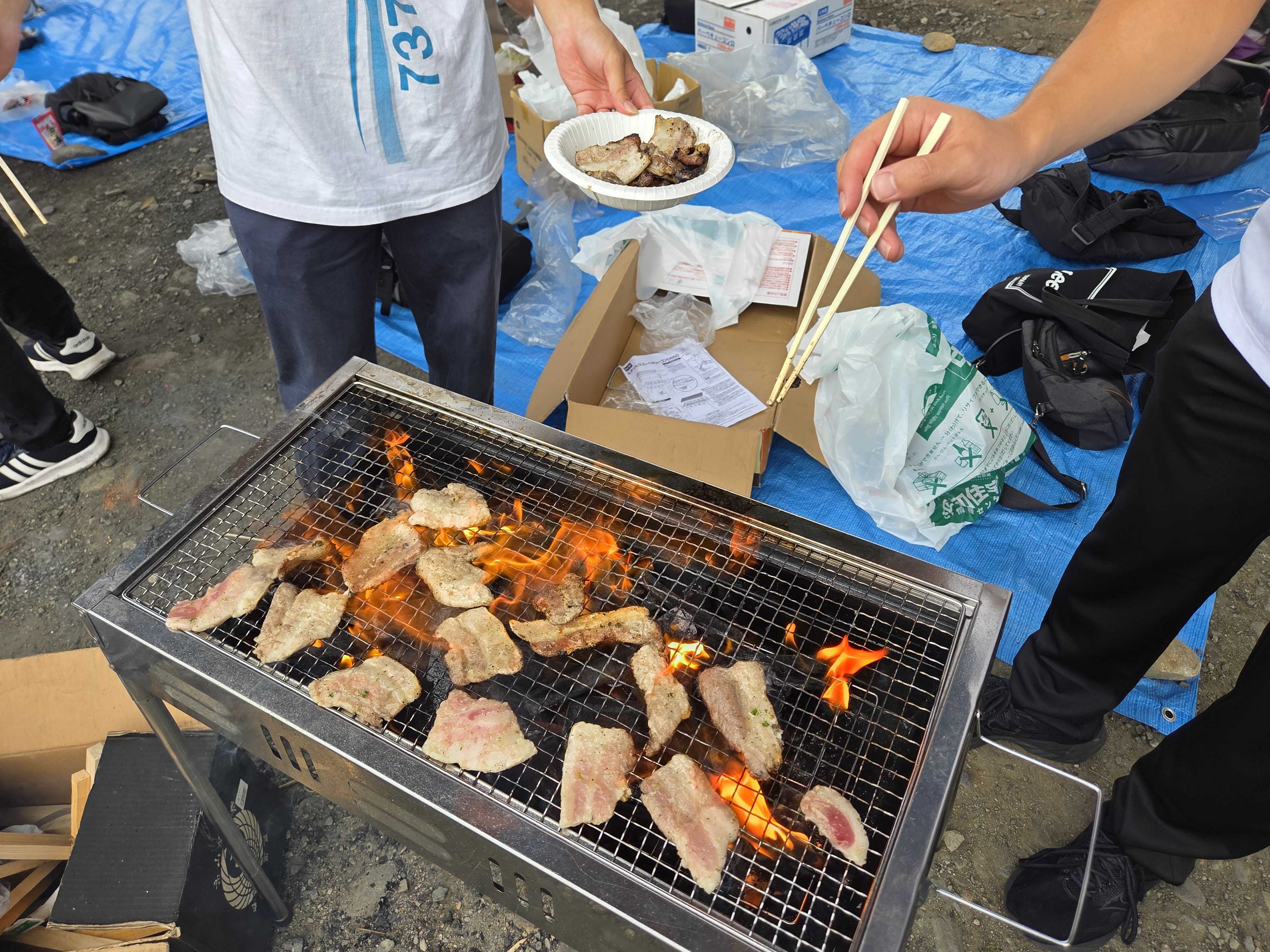
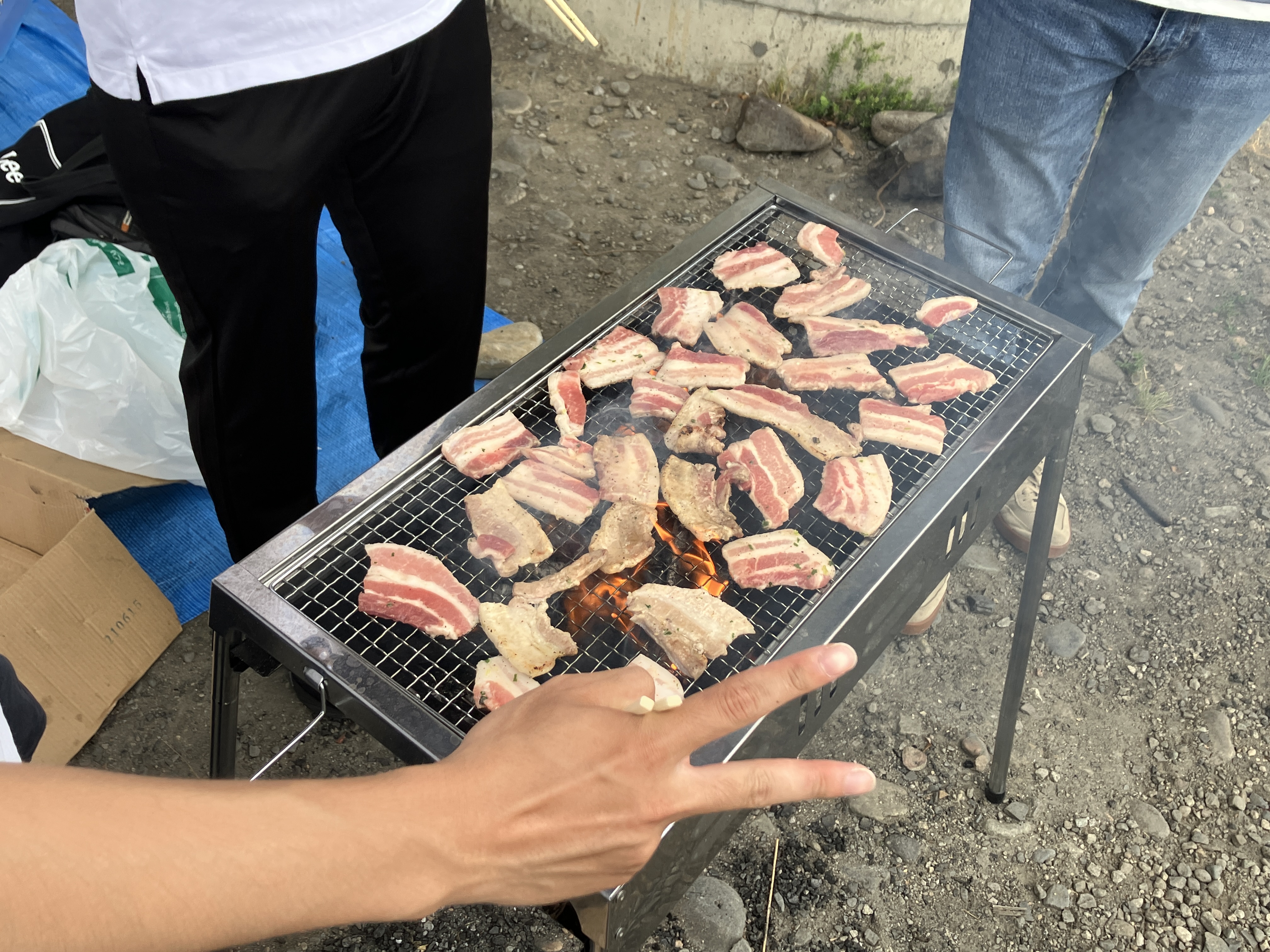
A imoni party was held.

Hello! I’m Imai, a first-year master’s student.

We recently held an Imoni party!

It was drizzling that day, so we struggled to get the fire going, but with everyone’s cooperation, we managed to cook a delicious Imoni!
We also had a great time interacting with the new members who joined Takizawa Lab in October, making it a fun and memorable event!
It has rained for the past few years in a row, so I really hope we can have it in clear weather next year!


Prof.Takizawa gave talks at WSSP 40

Hello, this is Imai, a first-year master’s student.

On October 14–15, 2025, Professor Takizawa from our laboratory gave a lecture at the 40th Workshop on Sustained Simulation Performance (WSSP40).

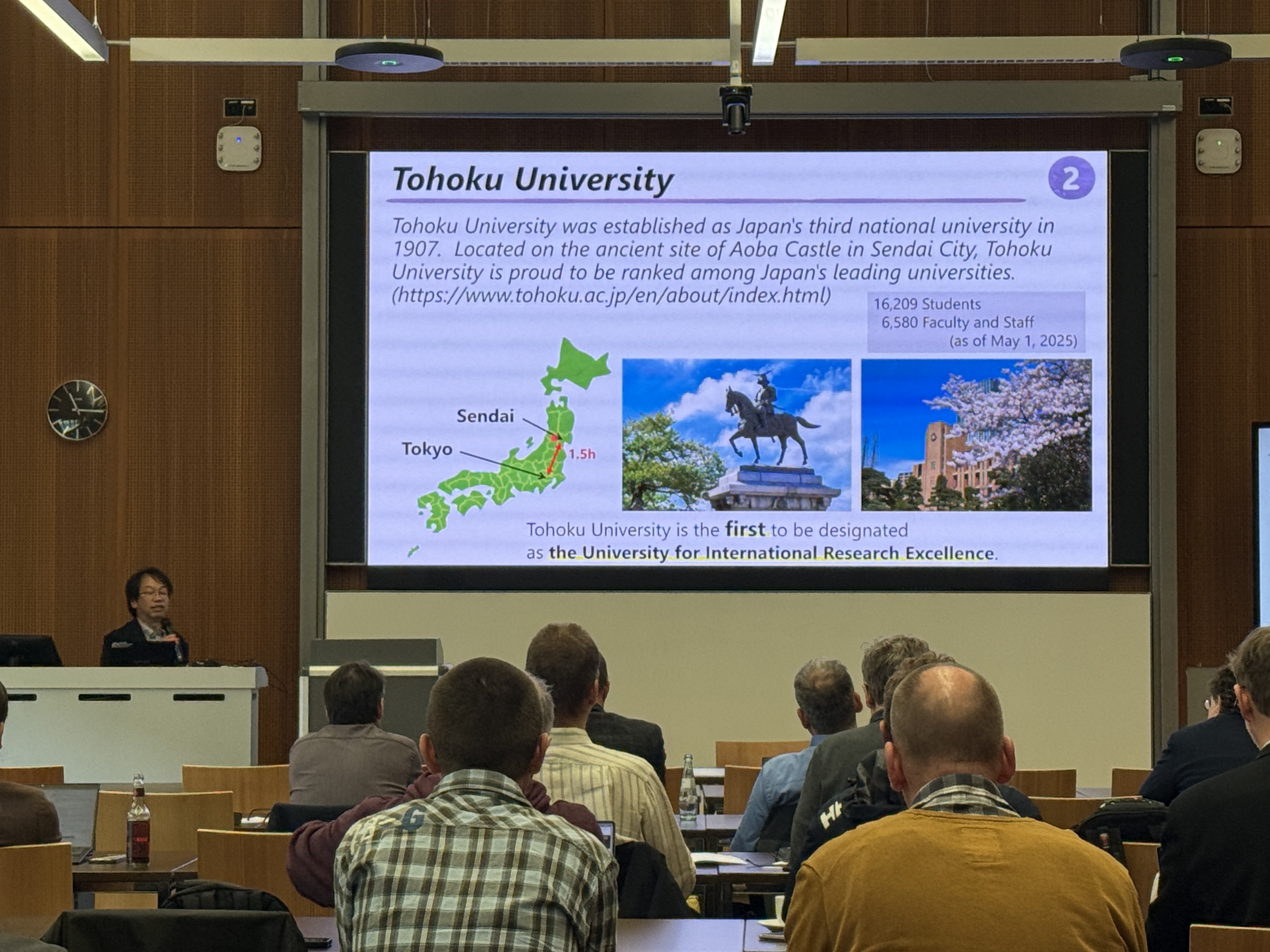
WSSP is a workshop jointly organized by Tohoku University’s Cyber Science Center and the High-Performance Computing Center Stuttgart (HLRS) in Germany. This time, both presenters and attendees participated in person at the Cyber Science Center, and the event saw a large turnout, making it a great success.

For details on the workshop program, please refer to this link.

Each presentation was highly insightful, and the workshop reinforced my motivation to contribute to the HPC field.